
Form factor is the most under-analysed decision in air purifier product planning. Buyers typically choose it by looking at what sells in their market, then negotiate price. The more profitable approach is to treat form factor as a portfolio variable — matching each type to a specific channel, customer, and logistics profile.
Three form factors dominate global trade: desktop (tabletop) units, floor-standing units, and wall-mounted units. They differ not only in size and CADR, but in container efficiency, margin structure, target channel, and the customer segment they serve. A distributor stocking all three badly will carry the wrong inventory mix for a year. A distributor stocking two correctly will outperform on both turnover and margin.
This analysis compares the three form factors on the dimensions that matter for B2B product mix decisions: market demand by region, coverage and performance ranges, shipping efficiency, margin structure, channel alignment, and portfolio risk.
Defining the Three Form Factors
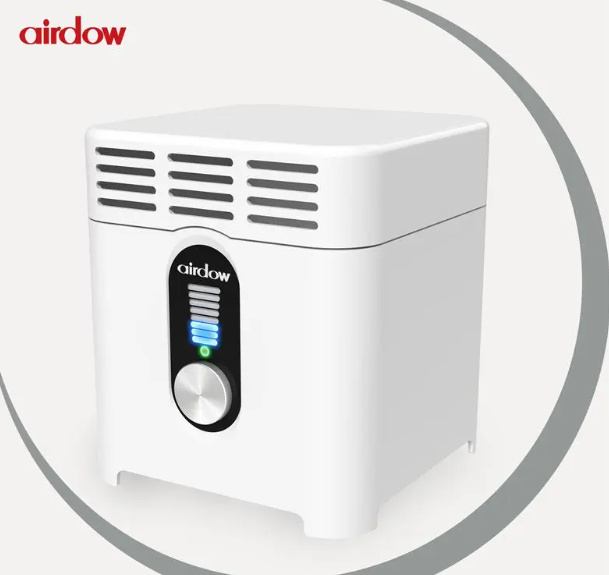
• Desktop / tabletop — Small units of roughly 1-3 kg, placed on desks, nightstands, or counters. CADR typically 50-150 m³/h, serving 10-20 m². Usually USB or low-voltage powered in the smallest sizes, mains-powered at the larger end.
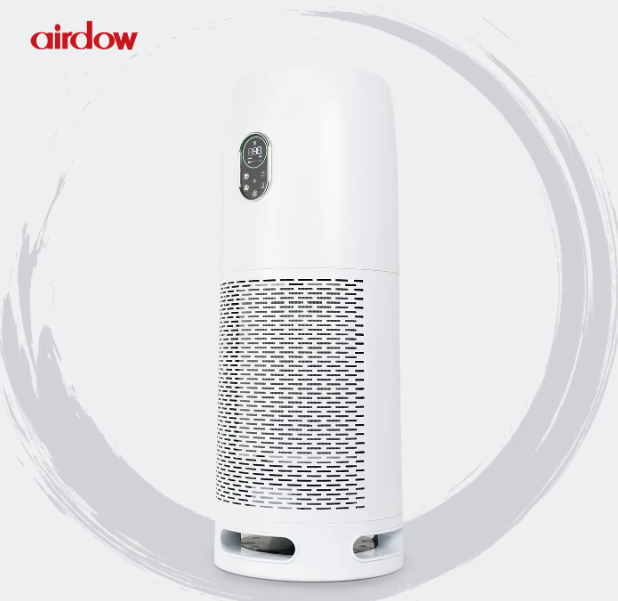
• Floor-standing — The mainstream category: 4-12 kg units with CADR of 200-600 m³/h, serving 20-60 m². Wheels or carry handles common. This is the form factor most consumers picture when they think of an air purifier.
• Wall-mounted — Fixed units installed on a wall, 3-10 kg, CADR typically 100-400 m³/h. Frees floor space, often doubles as a ventilation unit with fresh-air intake in the Chinese, Korean, and Japanese markets.
Form Factor Comparison: The Full Picture
|
Dimension |
Desktop |
Floor-Standing |
Wall-Mounted |
| Typical CADR | 50-150 m³/h | 200-600 m³/h | 100-400 m³/h |
| Coverage | 10-20 m² | 20-60 m² | 15-45 m² |
| Unit retail price | $20-80 | $80-400 | $120-450 |
| Factory FOB range | $8-35 | $35-180 | $45-200 |
| Typical margin | 30-45% | 25-40% | 30-45% |
| Carton volume | 0.01-0.03 m³ | 0.05-0.20 m³ | 0.03-0.09 m³ |
| Units per 40HQ | 3,000-8,000 | 400-1,200 | 1,000-2,500 |
| Installation | None | None | Wall fixing required |
| Primary channel | E-commerce, gifting | Retail, appliance chains | Projects, home improvement |
| Customer type | Renters, students, office | Families, homeowners | Developers, contractors |
| Repeat purchase rate | Moderate | Low | Low |
Market Demand by Region
Form factor preference is strongly regional, and getting this wrong is the most common product mix error:
• North America and Europe — Floor-standing dominates consumer retail. Desktop units sell as secondary bedroom or office items. Wall-mounted has limited consumer traction outside of ventilation-focused segments.
• China, Korea, Japan — Wall-mounted and ceiling ventilation have strong established demand because floor space is scarce and new-build ventilation standards are stricter. Floor units still lead in consumer retail.
• Southeast Asia — Desktop units are disproportionately strong: lower purchasing power, smaller living spaces, and a large rental population make the entry price point decisive.
• Middle East — Floor-standing leads on CADR requirements driven by dust and sandstorm conditions; desktop units underperform in larger rooms.
• India — Desktop and compact floor units dominate on price sensitivity; floor-standing growth follows rising incomes in urban markets.
• Institutional channels (all regions) — Wall-mounted strengthens sharply in offices, clinics, and schools, where floor space is operational rather than decorative.
Shipping Efficiency: The Hidden Margin Driver
For importers, container efficiency often matters more than unit margin. A container of desktop units can carry several times the retail value of a container of floor-standing units, which changes the economics of the entire business:
• Container value density — A 40HQ filled with desktop units can represent 4-6x the retail value of the same container filled with floor-standing units. This directly reduces freight cost per dollar of revenue.
• Freight per unit — At typical ocean freight rates, the per-unit freight burden on a floor-standing purifier can be 3-5x that of a desktop unit. In markets with high freight costs or long routes, this reshapes landed cost significantly.
• Damage risk — Large floor units with plastic housings and grilles are more exposed to shipping damage and higher claim rates. Desktop units in foam-fitted cartons have materially lower damage rates.
• Warehousing cost — Floor-standing units consume 4-8x the warehouse volume per unit. For distributors paying storage by pallet position, this is a recurring cost that desktop units avoid.
• Return logistics — E-commerce returns are expensive for large items. Desktop units are cheaper to ship back, which improves net margin on returns-heavy channels.
• The counter-argument — Floor-standing units generate far higher revenue and absolute gross profit per unit. Volume efficiency is not the same as profitability; the right balance depends on your cost of capital and turnover targets.
Margin Structure: Percentage Versus Absolute
• Desktop — Highest percentage margin in many markets (30-45%), driven by low landed cost and strong e-commerce pricing. Absolute margin per unit is small, so profitability depends on volume and marketing efficiency.
• Floor-standing — Slightly lower percentage margin (25-40%) but far higher absolute margin per unit. This is where distributors build revenue, and where brand-building and after-sales investment pays back.
• Wall-mounted — Attractive percentage margin (30-45%) in project channels, where specification selling reduces price sensitivity. However, sales cycles are longer and require technical support and installation partnerships.
• Attach and accessory effect — Desktop units sell well with accessories and replacement filters, creating repeat purchase opportunities. Floor units generate filter revenue too, but with a longer replacement cycle per customer.
• Price erosion risk — Desktop is the most commoditized category: many near-identical products, aggressive marketplace competition, and rapid price erosion. Floor-standing has more room for differentiation through CADR, noise, and design.
Channel Alignment: Matching Form Factor to Sales Route
|
Channel |
Best-Fit Form Factor |
Reason |
| Marketplace e-commerce | Desktop | Low price point, low shipping cost, easy returns |
| Own-brand DTC store | Floor-standing | Higher AOV, brand story, design differentiation |
| Appliance retail chains | Floor-standing | Shelf presence, demonstrable CADR, price anchoring |
| Gifting / corporate | Desktop | Low unit cost, packaging appeal, easy bulk orders |
| Real estate projects | Wall-mounted | Fitted at handover, frees floor space |
| Office / clinic fit-out | Wall-mounted + floor | Wall for common areas, floor for individual rooms |
| Rental / hospitality | Desktop | Low capital, easy replacement, no installation |
| Government tenders | Floor-standing | Specification-driven, CADR thresholds favour larger units |
Building a Balanced Product Mix
Rather than choosing one form factor, most successful distributors run a deliberate portfolio. A practical structure:
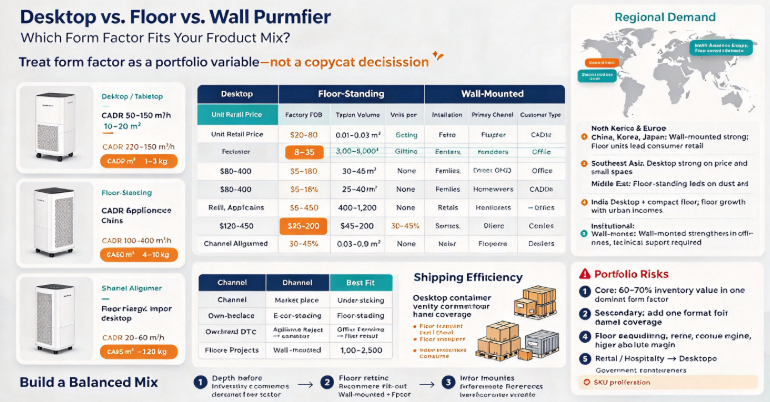
1. Lead with one core form factor — Choose the type that fits your dominant channel. This should carry 60-70% of inventory value and receive the marketing investment.
2. Add a secondary format for channel coverage — A desktop range opens e-commerce and gifting channels; a wall-mounted range opens project channels. This is diversification of channel, not just of product.
3. Use desktop as the acquisition product — Low price points bring first-time buyers in. Filter sales and upgrades then move them toward larger units over time.
4. Use floor-standing as the revenue engine — Higher absolute margin funds the business. Do not under-stock your best-margin-per-transaction product.
5. Use wall-mounted as the differentiator — Fewer competitors, specification selling, and higher-touch relationships. Requires technical capability, so treat it as a capability investment.
6. Avoid full-range spread too early — Carrying all three form factors across three or four SKUs each fragments working capital and service capability. Depth before breadth.
Portfolio Risks to Avoid
✓ Over-indexing on desktop — High percentage margin looks attractive until freight and marketplace price erosion compress it. Desktop-only portfolios are fragile to commodity competition.
✓ Under-stocking floor-standing — The revenue engine cannot fund the business if inventory is thin. Stockouts on the highest-absolute-margin product are the most expensive mistake in the category.
✓ Entering wall-mounted without support capability — Wall-mounted sales require installation guidance, fixing hardware, and technical documentation. Underestimating this produces returns and reputation damage.
✓ Ignoring regional preference — Launching wall-mounted into a market where it has no consumer precedent, or desktop into a market that demands CADR, wastes a season of working capital.
✓ SKU proliferation — Three form factors multiplied by multiple colorways and connectivity options creates a servicing burden. Filter compatibility alone becomes an operational cost.
Conclusion: Form Factor Is a Portfolio Decision
1. Desktop, floor-standing, and wall-mounted units serve different channels and customers — treat them as portfolio components rather than competing alternatives
2. Floor-standing is the revenue engine with the highest absolute margin per unit; desktop wins on percentage margin, container efficiency, and channel access
3. Shipping and warehousing efficiency can matter more than unit margin: a desktop container can carry 4-6x the retail value of a floor-standing container
4. Regional demand is decisive — wall-mounted leads in China/Korea/Japan and project channels, desktop leads in Southeast Asia, floor-standing leads in Europe and North America
5. Build depth before breadth: one core form factor at 60-70% of inventory, plus one secondary format for channel coverage, then expand only with supporting capability
Planning a product mix across desktop, floor-standing, and wall-mounted formats? Contact us at ada5@airdow.com for form factor specifications, container loading data, and OEM program options.
Post time: Oct-29-2026


